
How Do You Prepare Your Home for Installing EV Chargers?
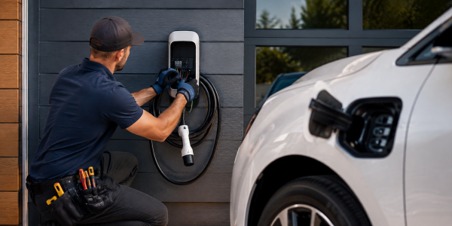
Thinking about charging your electric vehicle at home instead of waiting at a public station? A properly planned home charger can make daily driving much easier. But an EV charger is not simply another outlet. It adds a steady electrical load to your home, so your panel, wiring, circuit, grounding, and charger location all need to work together. In this guide, we explain what homeowners should know before installing EV chargers, especially when preparing an older Long Island home for modern electrical demands.
Why Home EV Charging Makes Sense
Imagine getting home after a long day, plugging in your vehicle, and waking up the next morning with the battery ready for the day. That simple routine is one of the biggest reasons homeowners choose a home charging setup.
The U.S. Department of Energy reports that most EV owners charge at home. Level 1 charging uses a standard 120 volt connection, while Level 2 charging normally uses 240 volts and can provide a much faster charging experience.
For many homeowners, Level 2 is the practical choice when they drive regularly and want overnight charging.
However, the charger should match the home, not just the vehicle.
Before we begin any installation, we want to know how the existing electrical system is handling the home’s current demands. Your oven, dryer, heating and cooling equipment, water heater, lighting, and other major appliances already place loads on the system.
Adding an EV charger means adding another significant electrical demand.
That is why proper planning matters.
What Your Electrical System Needs
Here is where many homeowners make a common mistake.
They see an open space in the electrical panel and assume a charger can simply be connected there. An open breaker position does not automatically mean the electrical service has enough capacity for an EV charger. The National Renewable Energy Laboratory notes that a proper site assessment and load calculation are important when determining whether a home’s service can support Level 2 charging.
We look at several important points:
• The capacity of the electrical service
• The condition of the existing panel
• Available breaker space
• Existing electrical loads
• Proper wire sizing
• Grounding and bonding
• The distance between the panel and charger
• The safest location for the charging equipment
Older Long Island homes can need extra attention. Some electrical systems were installed long before electric vehicles became part of everyday life.
That does not automatically mean you need a major upgrade.
Sometimes the existing system can support the charger. In other situations, an electrical service or panel upgrade may be appropriate. We believe homeowners should know what their system actually needs before work begins.
EV charging installations also need to follow applicable electrical codes and local requirements. The Department of Energy notes that EV charging equipment is treated as a continuous load under the National Electrical Code, which makes correct circuit design especially important.
Installing EV Chargers the Right Way
Good charger installation starts before the first wire is connected.
We begin by considering how you use your vehicle. Do you park in a garage? Do you use a driveway? How far is the charger from the electrical panel? Will the equipment be mounted indoors or outdoors?
These details affect the installation.
Outdoor charging is possible, but equipment must be suitable for outdoor use. The charging location should also protect the equipment, cable, and vehicle connection from unnecessary damage.
For a typical Level 2 setup, the charger usually needs a dedicated 240 volt circuit. The exact circuit and equipment requirements depend on the charger and installation design.
We also pay attention to practical details.
A charger should be easy to reach without creating a trip hazard. Cables should be routed neatly. Connections should be secure. The equipment should be mounted according to the manufacturer’s requirements.
After installation, testing matters too.
We want the system to operate properly before you depend on it for your daily commute.
This is where working with an experienced Residential Electrician can make a real difference. EV charging combines vehicle technology with the home’s electrical infrastructure. A professional needs to understand both sides of that equation.
Choosing a Residential Electrician in Levittown
If you live in Levittown and are planning an EV charger, choosing the right electrical professional is an important first step.
You do not want someone treating the project like a basic outlet installation.
Ask whether the electrician will evaluate the existing electrical service, consider the home’s total electrical load, check the panel, and install the charger according to applicable electrical requirements.
Our team at BiCounty Electric has served Long Island customers since 1958. We are licensed and insured, and we approach electrical work with the same focus on safety and workmanship that we bring to other residential projects.
We also understand that homeowners want clear answers.
If your panel needs attention, we explain why. If the existing system can support the charger, we explain that too. Our goal is not to recommend unnecessary work. Our goal is to create an installation that is safe, practical, and suitable for your home.
Homeowners in nearby East Meadow also have access to professional residential electrical services when planning EV charging or other electrical upgrades.
And remember, an EV charger is part of your home’s electrical system. If you notice frequent breaker trips, flickering lights, warm outlets, burning smells, or unusual electrical behavior, do not ignore those signs.
For urgent electrical problems, we provide Emergency Service Calls during business hours.
Questions Homeowners Ask About EV Chargers
1. Can I plug an EV charger into a regular outlet?
You can use Level 1 charging with an appropriate 120 volt outlet. However, Level 2 charging generally requires a dedicated 240 volt circuit and professional installation.
2. Do I need a panel upgrade for an EV charger?
Not necessarily. It depends on your home’s electrical service, existing loads, panel condition, and the charger being installed. A proper electrical assessment can determine whether an upgrade is needed.
3. Is Level 2 charging better for home use?
For many drivers, yes. Level 2 charging provides considerably more charging power than Level 1 and is commonly used for residential home charging.
4. Can an EV charger be installed outside?
Yes. Outdoor installation can be safe when the charging equipment is rated for outdoor use and installed correctly. Location, mounting, wiring protection, and weather exposure all need to be considered.
5. Why should an electrician install my EV charger?
An EV charger places a sustained electrical load on the system. A qualified electrician can evaluate capacity, install the proper circuit, check wiring and grounding, and help ensure the installation follows applicable electrical requirements.
A Smarter Way to Start
Installing an EV charger should not begin with choosing a charger from a box. It should begin with understanding your home.
Once we know what your electrical system can safely support, we can help determine the right approach for your vehicle, parking location, and charging habits.
For homeowners in Levittown and surrounding Long Island communities, professional planning can turn EV charging from a complicated electrical project into a simple part of everyday life.
Call (516) 221 2225 to discuss your electrical project and arrange the next step.